
How to Become a Wedding Planner from Home: The Definitive Guide
To become a wedding planner from home, you need to establish a dedicated home workspace, register your business legally, complete professional training to master event logistics, and build a strong portfolio. After setting up your operational systems and pricing models, you can start booking clients by networking with local vendors and building a recognizable digital brand.
Many people dream of running a creative business from their living room. The idea of curating beautiful events, managing your own schedule, and working remotely is highly appealing. But the reality of a wedding planner career path involves much more than picking out color palettes and tasting cake.
Weddings involve significant financial investments, complex vendor teams, fixed timelines, and zero margin for error.
At V Wedding Academy, founded by Kyla, Kyra, and Pauline, we built our multi-division wedding company from the ground up. Over the past nine years, we have supported over 2,000 weddings and trained more than 500 students. We learned that most aspiring planners are taught inspiration when they actually need infrastructure.
Here is the exact step-by-step process to start a wedding planning business from home and build a foundation that lasts.
How to Become a Wedding Planner from Home
Step 1: Assess Your Skills and Industry Readiness
Before you buy a domain name or design a logo, you have to understand the true nature of the job. You will be managing client expectations during highly emotional moments.
Couples are not simply hiring a day-of coordinator. They are placing trust in your judgment and your ability to lead when pressure rises. To succeed, you need extreme organizational skills, financial literacy to manage strict budgets, and the ability to anticipate risk before it becomes a problem. You need to be comfortable leading conversations instead of just reacting to them.
Step 2: Invest in a Wedding Planner Certification Canada Trusts
The fastest way to fail in this industry is to learn through trial and error on a client’s actual wedding day. Formal training prevents costly rookie mistakes and protects your emerging reputation.
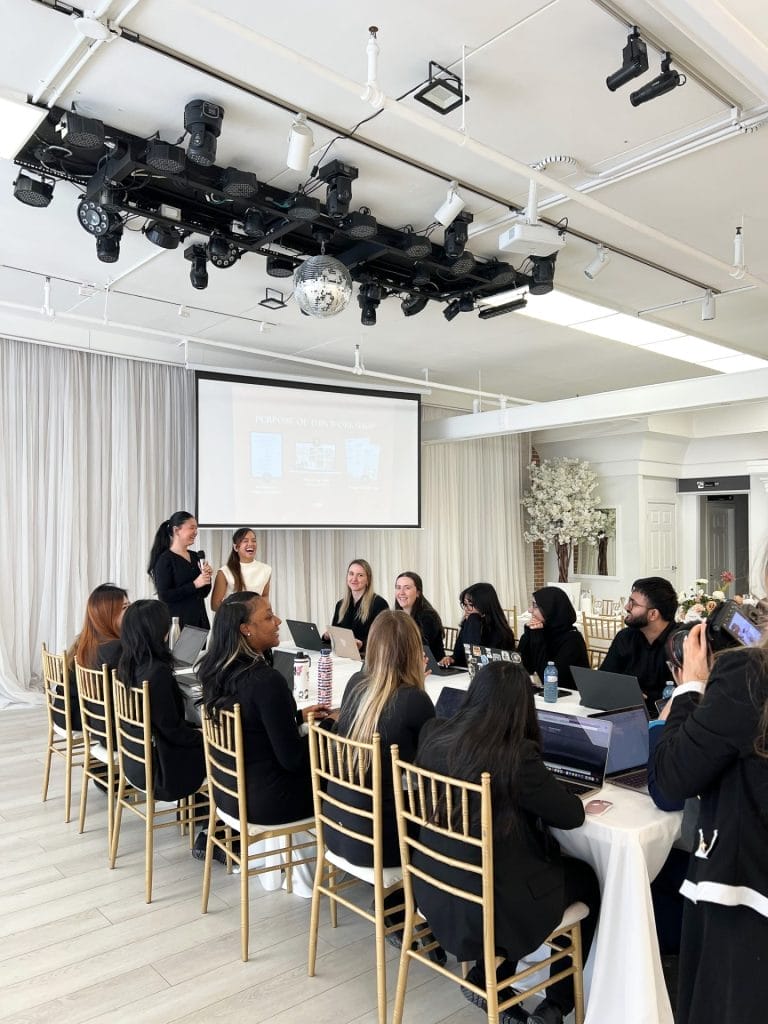
If you are looking for wedding planner courses Toronto locals and global students trust, prioritize programs that teach business first. The V Wedding Planner Program™ (VWPP) trains aspiring planners to run a real, professional business using proven systems.
Inside VWPP, you learn the operational structure required to lead events with confidence. Our modules cover:
- The full client journey from first inquiry to execution.
- Strategic budgeting and confident pricing.
- Timeline building and live event execution.
- Contracts, systems, and business structure.
You walk away with a professional certification and the exact frameworks Kyla, Kyra, and Pauline used to scale their own companies.


Step 3: Set Up Your Home Business Legally
Running a business from home requires you to set up proper legal and financial boundaries.
For those wondering how to become a wedding planner in Ontario, you must register your business name with the provincial government and set up a proper tax account. The Government of Canada business registration portal provides clear guidelines on structuring your sole proprietorship or corporation. For global readers, check your local municipal and state guidelines for home-based business licenses.
Next, establish a dedicated workspace in your home. Even if you are working from a spare bedroom, you need a professional environment to host virtual client onboarding meetings, store physical vendor samples, and manage your event planning software.
Step 4: Master Wedding Logistics and Vendor Coordination
A beautiful design means nothing if the logistics fail. Your primary job is to create a realistic master timeline and enforce it.
You need to understand the correct order of planning. You must know when to book each vendor, how to allocate funds by guest count, and how to read contracts strategically. Effective vendor coordination requires organized communication systems. You have to lead assistants, handle load-ins, manage room flips, and establish on-site leadership presence.
This is what separates hobbyists from professionals. When you join V Wedding Academy, you get access to our exclusive Plug-and-Play Planner Kit™, which includes ready-to-use vendor communication email templates and timeline frameworks.
Step 5: Build a Portfolio with Styled Shoots


Couples need proof of your capabilities before they hand over their budget. Since you are just starting from home, you have to build that proof yourself.
One of the best ways to gain portfolio-worthy experience is by organizing styled shoots. Partner with local florists, rental companies, and photographers to design a mock wedding setup. This gives you high-quality images for your website and allows you to practice your design direction.
You can also assist established planners in your area to learn live event control and build a professional wedding-industry resume.
Step 6: Market Your Services and Land Clients
Once your systems and portfolio are ready, you need to make your business visible.
Build a clean, optimized website that clearly outlines your services, from partial planning to full design. Network intentionally with local venues and vendors. Venues are the best referral sources in the industry. According to industry data from WeddingWire, couples often book their venue first and ask that venue for planner recommendations.
Focus on local SEO for wedding planners. Claim your Google Business Profile, collect testimonials from your styled shoot partners, and optimize your social media presence to show behind-the-scenes logistics, not just pretty photos.
FAQ: Starting a Wedding Planning Business
No, you do not need a traditional university degree to be a wedding planner. However, specialized, industry-specific training is highly recommended. Taking a professional course gives you the operational templates, legal contracts, and logistical frameworks you need to protect your business and deliver a flawless client experience.
You can set up the legal foundation of your home-based business in a few weeks. Learning the necessary skills and operational systems takes a bit longer. The V Wedding Planner Program™ is self-paced and designed to be completed in six weeks or less. Building a full-time income typically takes one to two years of consistent networking, portfolio building, and marketing.
Ready to Turn Your Passion into a Profession?
V Wedding Academy exists for those who want more than surface-level knowledge. If you are serious about building a skill set, running weddings with confidence, and turning event planning into a structured, income-generating business, this is where that foundation begins.
You Might Also Like: