How Long Does It Take to Get Your First Wedding Planning Client — And How to Speed It Up
Most new wedding planners land their first paid client within three to six months of consistently building their presence, portfolio, and professional relationships. That timeline shortens significantly for planners who enter the industry with clear positioning, a structured process, and at least one visible credential. Without those foundations in place, the wait stretches to a year or longer — not because the market is too crowded, but because the business is not yet ready to be found.
That is the honest answer most courses skip over. And it is also where the real strategy begins.
How Long Does It Take to Get Your First Wedding Planning Client?
The Real Timeline: What New Planners Actually Experience
The path from “aspiring planner” to “booked planner” looks different depending on what someone brings to the table from day one.
The table below maps the most common starting points and realistic timelines based on what planners typically experience in the Canadian and North American wedding market.
| Starting Point | Typical Timeline to First Paid Client |
| No experience, no portfolio, no network | 9–18 months |
| Some event experience, no wedding-specific training | 6–12 months |
| Assisted at weddings, has photos, basic network | 3–6 months |
| Trained with structured program, has portfolio + systems | 1–4 months |
| Trained + vendor referrals already in place | 1–8 weeks |
The gap between the top and bottom rows is not talent. It is preparation.
Planners who enter the industry with documented systems, a clear service offering, and a portfolio that proves their capability move through the trust-building phase far faster than those who start from scratch without structure.
Keep reading, because the factors that determine your timeline are more controllable than most people think.
What Actually Determines How Fast You Get Clients
Speed to first booking depends on five specific factors. Each one is within a new planner’s control. Addressing all five at once, rather than one at a time, compresses the timeline dramatically.

Factor 1: How Clear Your Positioning Is
Couples do not hire generalists when they can hire a specialist. A planner whose website says “I plan all types of events” gives a couple no reason to choose them over anyone else. A planner whose presence communicates “I specialize in intimate outdoor weddings in the Greater Toronto Area for couples who want a calm, structured planning experience” gives a couple an immediate reason to feel understood.
Positioning is not about limiting your market. It is about speaking directly to the people most likely to book you. According to HubSpot’s marketing research, targeted messaging consistently outperforms broad messaging in conversion rate across service businesses. Wedding planning is no different. The clearer the message, the shorter the gap between discovery and inquiry.
Factor 2: Your Portfolio and Social Proof
Couples want proof before they trust. A planner with no portfolio, no photos, and no testimonials asks a couple to take a significant leap of faith on a five-figure investment. That is a hard sell, no matter how talented the planner.
Building a portfolio before landing paid clients is completely achievable through two proven routes: assisting an established planner at real weddings, and producing a styled shoot.
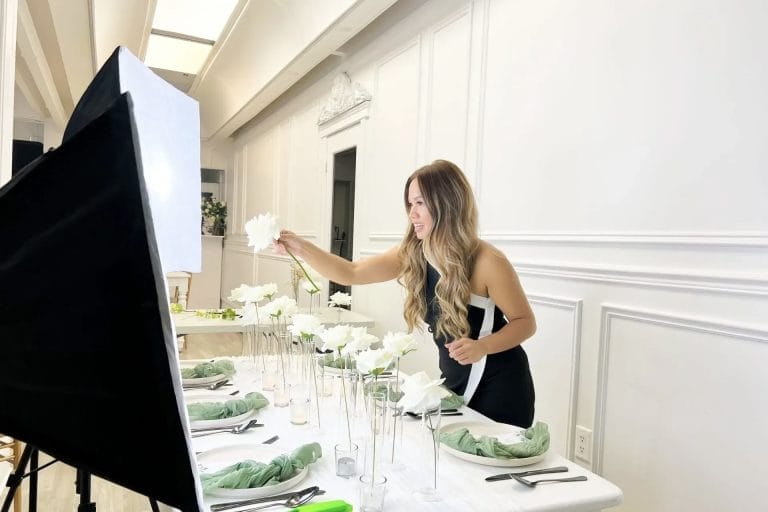
A styled shoot is a staged, intentional photoshoot that simulates a real wedding environment. It is widely accepted in the industry as a legitimate portfolio-building tool, and it costs far less than most new planners expect. The goal is to get professional photos that show your eye, your coordination, and your attention to detail.
Factor 3: Your Vendor Network
In the wedding industry, relationships generate revenue.
Photographers, florists, caterers, and venue coordinators all work with couples before a planner does. A florist who recommends a planner to a newly engaged couple has already warmed that lead. That recommendation carries more weight than any Instagram post.
Building a referral-generating vendor network takes consistent, genuine relationship-building over time. Attend local wedding industry meetups. Follow up with vendors after shared events. Be easy to work with, responsive, and professional every single time. According to The Wedding Report, vendor referrals remain one of the top sources of new bookings for wedding planners across North America. This channel is free, high-converting, and often overlooked by planners who focus exclusively on social media.
Factor 4: Your Online Visibility
A couple who hears a vendor recommend you will search your name immediately. What they find in that first search determines everything.
A clean, professional website with clear services, pricing guidance, a portfolio section, and a contact form builds trust fast. An empty or missing web presence kills momentum just as fast.
Beyond a website, a fully optimized Google Business Profile puts a new planner on the map for local search queries like “wedding planner Toronto” or “wedding coordinator near me.” This step takes less than two hours to complete and delivers compounding returns for months. Planners who skip it leave a significant visibility gap that competitors fill instead.
Factor 5: How You Handle Inquiries
This factor surprises most people, but it is critical. A planner can do everything right on the visibility side and still lose bookings at the inquiry stage. Slow response times, vague pricing, unclear processes, and unprofessional communication all push couples toward another planner.
Studies on service business conversion consistently show that responding to an inquiry within five minutes increases the likelihood of a sale by up to 100 times compared to responding 30 minutes later. Speed signals professionalism. A ready-to-use inquiry response template and a structured consultation process eliminate the friction that costs new planners their early bookings.
The Fastest Paths to Your First Booking
Knowing the factors is one thing. Activating them quickly is another. These three strategies consistently accelerate the timeline from aspiring to booked for new planners in the wedding industry.
Assist an Established Planner First
Reaching out to established wedding planners in your city to offer your time as a day-of assistant gives you three things at once: real event experience, professional photos from the day, and a credible reference. Many planners actively look for reliable assistants during peak season, which in most Canadian markets runs from May through October.
This is not unpaid hustle for the sake of hustle. It is a deliberate strategy. One real wedding day on your resume, with a testimonial from the lead planner, moves you out of the “no experience” category immediately.
Produce a Styled Shoot
A styled shoot lets a new planner demonstrate their coordination skills, their aesthetic direction, and their vendor relationships all at once. Organize a small team of vendors, including a photographer, a florist, and a venue, and produce a short shoot that represents the type of weddings you want to plan. Submit the finished images to wedding blogs or publications for additional exposure.

Platforms like Green Wedding Shoes and Magnolia Rouge actively accept styled shoot submissions from new planners and can put your work in front of tens of thousands of engaged couples.
Launch With a Limited Introductory Offer
Offering your first two or three clients a reduced rate in exchange for a detailed testimonial and permission to use their wedding photos in your portfolio is a smart launch move, not a desperation move. Frame it correctly: “As part of a limited launch offering, select couples will receive our full planning service at an introductory investment.” That language positions the discount as exclusive access, not a price cut.
The goal is to build documented wins fast, then move to full pricing once the portfolio and reviews support it.
Common Mistakes That Slow Everything Down
Even motivated planners lose months to avoidable missteps. The most common ones show up repeatedly across the industry.
- Waiting until everything feels “ready” before launching. Perfection is the enemy of momentum. A good-enough website with a clear offer beats a perfect website launched six months too late.
- Building a social media presence before building a referral network. Vendor relationships convert faster. Social media takes longer but matters for credibility. Do both, but prioritize the former.
- Underpricing without a plan to raise rates. Starting too low sets a pricing anchor that is hard to move. Build introductory pricing with a clear plan to increase it after your first three bookings.
- Skipping a structured consultation process. Couples who ask “how does this work?” and get a vague answer lose confidence fast. A documented consultation framework communicates professionalism before a contract is signed.
- Treating marketing and operations as separate. The most effective marketing in this industry is excellent execution. Planners who run weddings beautifully get referrals. That reputation is a marketing system.
Frequently Asked Questions (FAQs)
Most people go from zero background to first paid client within six to twelve months when they follow a structured path. That path includes formal training, portfolio building through styled shoots or assisting, establishing an online presence, and actively building vendor relationships. Planners who enter the industry without structured preparation often find the timeline stretches to eighteen months or longer, largely because they spend the early months building what trained planners start with.
Vendor referrals consistently convert faster than social media leads because they arrive pre-warmed. A couple who contacts a planner based on a florist’s recommendation has already received a personal endorsement from someone they trust. Social media builds brand awareness and long-term credibility, but it rarely converts at the same speed as a direct referral. The most effective strategy combines both: build vendor relationships immediately and build social presence consistently. Neither replaces the other.
A certification is not legally required to work as a wedding planner in Canada. That said, it signals professional seriousness to both clients and vendors, especially early in a career when experience is limited. A credential from a credible, industry-specific program helps a new planner stand out in a market where anyone can call themselves a wedding planner. It also means starting the business with real systems, not guesswork, which directly affects how quickly couples trust and book.
The V Wedding Planner Program™ (VWPP) includes a full module dedicated to Visibility, Growth and Long-Term Industry Presence, covering how couples find planners, local SEO, social media positioning, vendor networking, and referral strategy. Beyond marketing, the program equips students with client consultation frameworks, inquiry response systems, and proposal processes that convert leads into bookings. Students finish the program with a portfolio strategy, professional positioning, and the operational tools needed to show up as a credible, bookable planner from day one.
Absolutely. Social media following does not equal bookings. Plenty of wedding planners with fewer than 1,000 followers run full, profitable businesses built almost entirely on vendor referrals, Google search visibility, and word-of-mouth. What matters far more than follower count is the quality and clarity of what a couple sees when they search a planner’s name. A professional profile, a strong Google Business listing, and two or three genuine vendor relationships will outperform a large following with no referral network behind it every time.
Your First Client Is Closer Than You Think — If You Build the Right Foundation
The timeline question is really a foundation question. Planners who get clients quickly are not luckier. They are more prepared. They enter the industry with structure, systems, and the professional credibility that makes couples feel safe saying yes.
The V Wedding Planner Program™ at V Wedding Academy was built specifically to create that foundation. Over 12 structured modules — covering everything from client consultations and vendor management to business setup, portfolio building, and visibility strategy — VWPP™ equips aspiring planners with what they need to step into their first inquiry with confidence, not guesswork.


Built by planners who have supported 2,000+ real events and trained 500+ students inside active wedding businesses, this is not a theory-based course. It is operational infrastructure, delivered as professional education.
Public enrollment opens soon. Join the VWPP™ Waitlist today for priority access and to be first in line when doors open.
You Might Also Like: